

zach@zacherydesigns.com
Zachery Designs ©2026


menu
close
Mozilla Monitor helps people understand when their personal information has been exposed online and what they can do about it. I led product design for the redesign and launch of Mozilla Monitor Plus, expanding the free breach-monitoring experience with paid data-removal capabilities and creating a clearer path into Mozilla’s broader privacy ecosystem. The challenge was bigger than adding a subscription tier. We needed to make a complex and often anxiety-inducing privacy problem feel understandable, actionable, and trustworthy—while creating a product experience people would see enough value in to pay for.

Lead Product Designer
8 months
Product Design, Content Design, UX Research, Product Management, Frontend Engineering, Backend Engineering
Product strategy, experience design, interaction design, prototyping, cross-functional facilitation, leadership presentations, and engineering handoff.
Mozilla Monitor Plus launched in the United States on February 6, 2024.
The initial response exceeded our expectations.
31% increase in Monitor Plus subscribers
2,765 Plus subscribers
Exceeded the February subscriber forecast by 365 subscriptions
Exceeded the first-month subscription goal within the first week
97 Google Lighthouse score
The launch demonstrated that users saw value in a more proactive approach to protecting their personal information and gave Mozilla a foundation for expanding Monitor beyond breach alerts into ongoing privacy protection.
Mozilla Monitor had already attracted close to 10 million sign-ups, with approximately 4.7 million users in the United States. The opportunity was to build on that trust by introducing enhanced privacy protection for customers who wanted more than breach alerts.
Our goal was to create an experience that could:
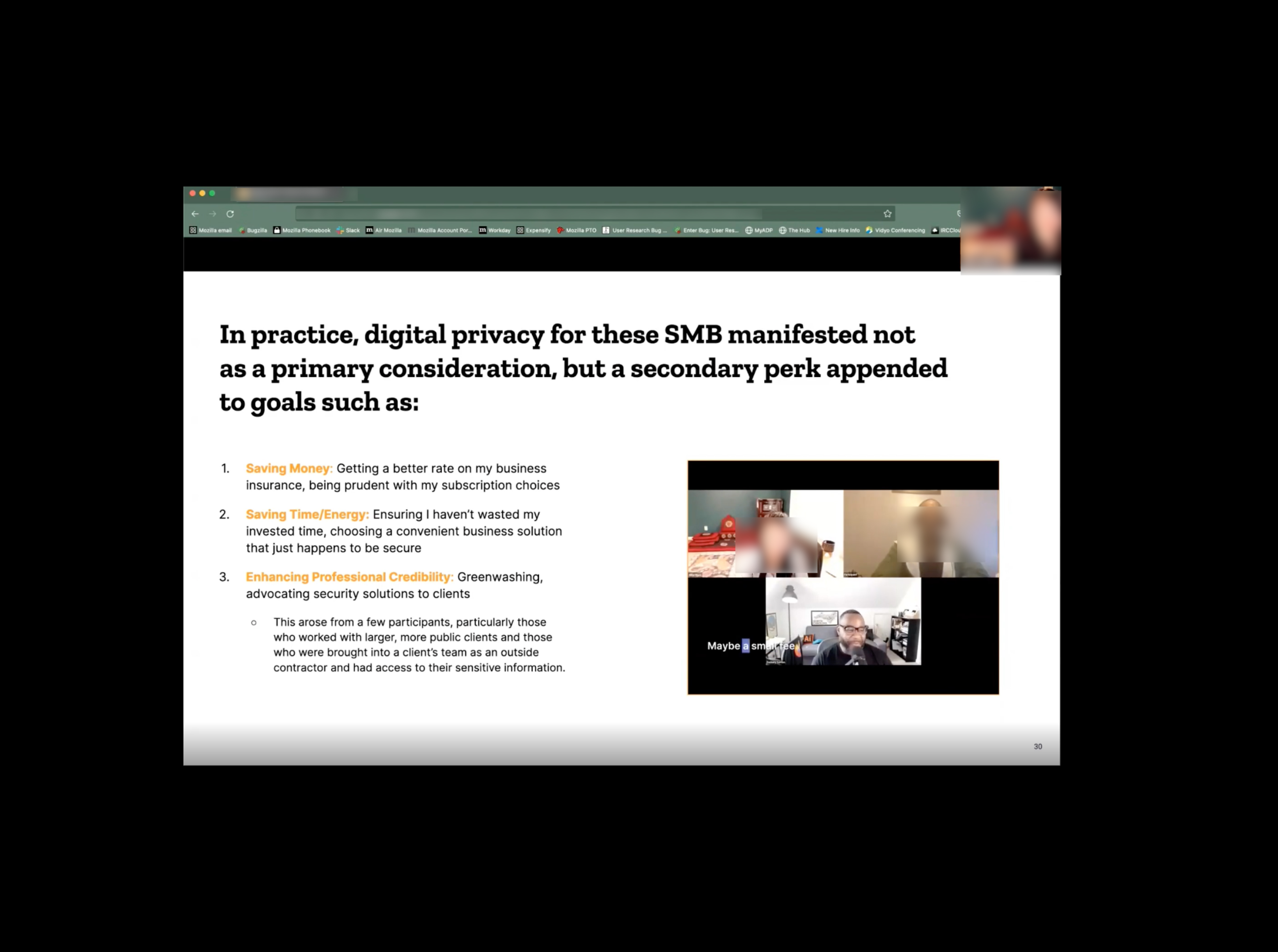
We conducted five rounds of user interviews to better understand how people think about online privacy, data exposure, and identity protection.
The research reinforced an important truth: people weren’t looking for more information—they were looking for clarity and control.
Several needs consistently emerged:
Meet me where I am.
People had very different levels of knowledge, urgency, and experience with privacy products.
Make it easy to understand what I should do next.
Privacy threats can feel abstract and overwhelming. Users wanted clear actions rather than additional complexity.
Help me stay protected over time.
People valued monitoring, reminders, and ongoing support rather than a one-time privacy check.
Research also identified a particularly motivated segment of users who felt highly vulnerable to exposure and were already taking active steps to protect themselves through breach alerts, identity monitoring, and data-removal services.

One of the core experience challenges was that Monitor needed to work for several very different audiences.
We had existing U.S. customers, returning customers, new users, and international users who would not all have access to the same features.
Rather than designing a single linear experience, I mapped the major user journeys to understand how account state, location, eligibility, and previous Monitor usage affected what someone should see and what action they should take next.
These flows became the foundation for the new experience and helped the team align around where free monitoring, premium protection, and onboarding should intersect.

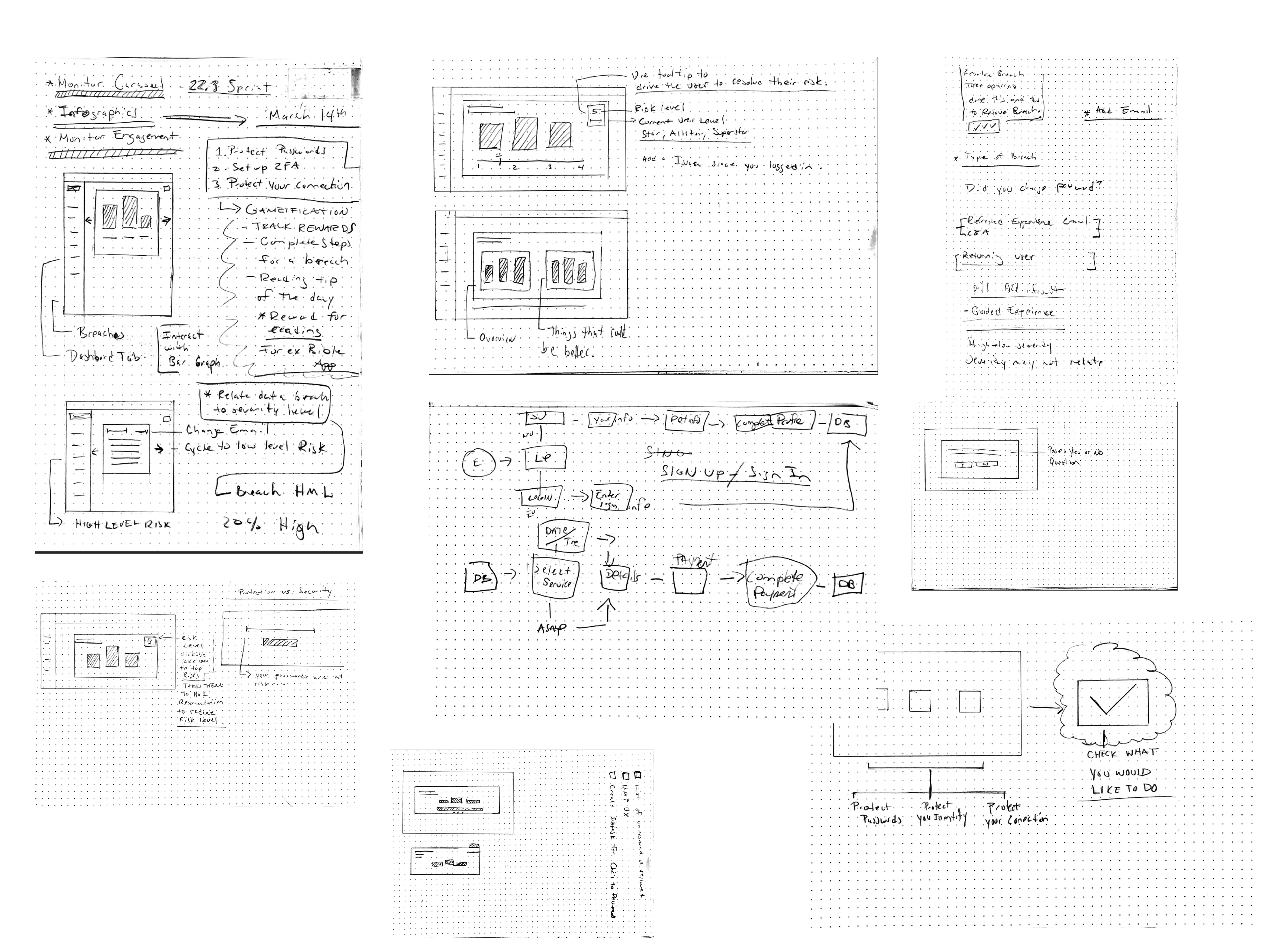
Once we understood the major journeys, I began exploring how Monitor could organize a large amount of privacy information without overwhelming people.
Through sketching, storyboarding, and rapid exploration, I worked through different approaches to the dashboard, data visualization, navigation, feature hierarchy, and interaction model.
The goal was not simply to redesign the interface. We needed a framework that could help someone quickly answer three questions:
What happened?
How exposed am I?
What can I do about it?
That framing helped move the product away from simply presenting breach information and toward an experience centered on progress and action.

A major design challenge was turning technical and potentially alarming information into something people could understand at a glance.
The new experience used clearer hierarchy and actionable guidance to help users move from identifying privacy risks to resolving them.
Rather than treating every piece of information with equal weight, the design emphasized what required attention, what Monitor could address automatically, and what users could do themselves.
This became particularly important for Monitor Plus, where the value of the product depended on users understanding not only that their information had been exposed, but also what the service was actively doing to help remove it.

Introducing a subscription into an established free product required careful attention to trust.
We needed to explain the value of Monitor Plus without making the free experience feel intentionally limited or using fear as a conversion mechanism.
The experience was designed to make the difference between monitoring and active data removal clearer, giving users enough context to decide whether the additional protection was valuable to them.
Prototypes allowed us to evaluate these flows early, test the overall experience, and refine how users moved through onboarding and into the redesigned product before engineering implementation.


Privacy products naturally deal with stressful subjects: data breaches, identity exposure, and personal information appearing online.
I wanted the interaction design to acknowledge that context without making the product itself feel alarming.
We introduced lightweight feedback and celebratory moments at key milestones to reinforce progress and give people a sense of accomplishment as they improved their privacy.
These micro-interactions also helped establish a more approachable personality for Monitor while maintaining the clarity and trust expected from a Mozilla product.
Working closely with UX Research, we tested the redesigned experience using task-based scenarios.
Overall, participants responded positively to the usability of the new Monitor experience and the clarity of the results. Research also indicated that users understood the relationship between the subscription price and the service being offered, while revealing opportunities to continue refining how recurring data removal should work over time.
Those findings gave the team confidence to continue toward launch while identifying areas for future iteration.

Monitor Plus reinforced how important it is to design privacy experiences around agency rather than anxiety.
People don’t necessarily need to become privacy experts. They need to understand what is happening, why it matters, and what they can do next.
The project also reinforced the value of bringing research, product, content, design, and engineering together early. Many of the hardest problems weren’t purely interface problems—they involved product strategy, eligibility, messaging, technical constraints, and trust.
That systems-level collaboration ultimately helped us turn a complex privacy service into a clearer product experience and successfully introduce a new revenue model for Mozilla Monitor.


